

Introduction
5G is more than just a faster version of 4G—it’s a complete evolution in mobile connectivity. While many users experience 5G through “Non-Standalone” networks, the true potential lies in 5G Standalone (SA) technology. But what exactly is 5G Standalone, and how will it impact your mobile experience? Let’s dive in.
What Is 5G Standalone? (H2)
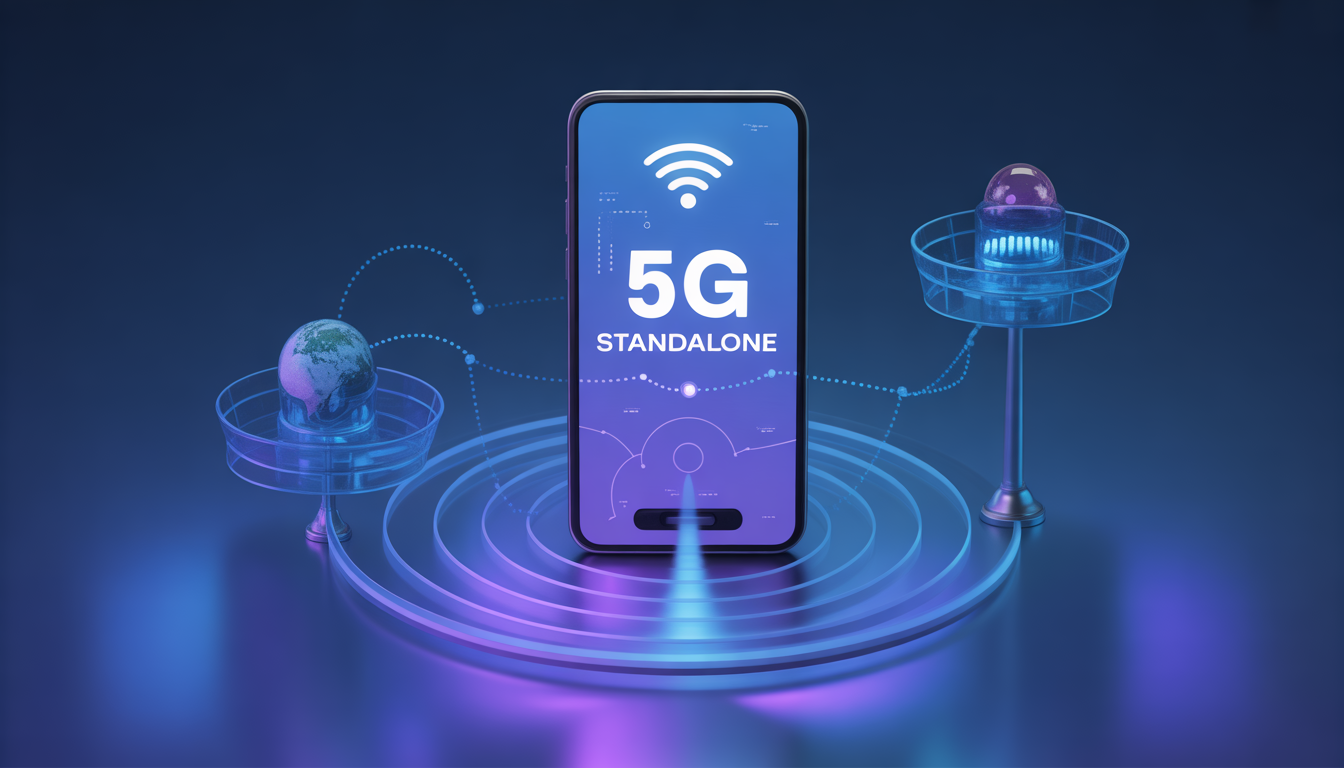
5G Standalone refers to a 5G network that operates independently of existing 4G LTE infrastructure. Unlike Non-Standalone (NSA) 5G, which still relies on 4G for certain functions like signaling, SA networks use a dedicated 5G core to manage connections and traffic.
Key Features of 5G Standalone (H3)
- Full 5G Core Integration: Eliminates reliance on 4G LTE networks.
- Ultra-Low Latency: Can achieve as low as 1 ms response time, ideal for real-time applications.
- Network Slicing: Allows operators to allocate network resources for specific use cases.
- Enhanced Reliability: Supports critical services like autonomous vehicles and industrial automation.
How 5G Standalone Changes Mobile Performance (H2)
The move to standalone 5G isn’t just about faster downloads—it transforms the way mobile networks handle traffic and connectivity.
Improved Speed and Capacity (H3)
5G SA supports higher bandwidth, meaning users can stream high-definition content, participate in cloud gaming, or download large files much faster. Real-world tests have shown SA networks can double or triple peak speeds compared to NSA 5G.
Ultra-Low Latency (H3)
Latency is the delay before data begins transferring. SA 5G drastically reduces latency, enabling near-instant communication between devices and networks. This is crucial for:
- Cloud gaming
- Augmented and Virtual Reality applications
- Remote surgery and robotics
Enhanced Reliability and Stability (H3)
By using a dedicated 5G core, standalone networks reduce congestion, provide more stable connections, and enable network slicing to prioritize critical services.
Use Cases and Practical Applications (H3)
- Smart Cities: Traffic systems, surveillance, and energy grids can operate seamlessly.
- Industrial IoT: Factories can run automated machinery with minimal risk of network lag.
- Autonomous Vehicles: Real-time data exchange ensures safer navigation.
- AR/VR Experiences: Immersive applications function without noticeable lag or interruptions.
Pros & Cons of 5G Standalone (H2)
Pros:
- Significantly lower latency
- Higher peak data speeds
- Improved network reliability and efficiency
- Supports innovative use cases like industrial IoT and autonomous systems
Cons:
- Higher deployment costs for telecom operators
- Limited availability initially due to infrastructure requirements
- Requires compatible devices and network support
Read more: What Is a VPN? Pros, Cons, and When You Should Use One
Frequently Asked Questions(FAQs)
Q1: Is 5G Standalone available everywhere?
Not yet. Most networks currently use NSA 5G. SA adoption is gradually expanding in major cities and industrial hubs.
Q2: Do I need a new phone for 5G SA?
Yes. Devices must support 5G SA to fully leverage its benefits.
Q3: Will 5G SA replace 4G completely?
Eventually, yes, but the transition will be gradual. 4G will continue serving areas where 5G coverage is limited.
Q4: How does SA 5G affect battery life?
Initially, battery usage may increase due to higher network activity, but optimization improvements in devices and networks will mitigate this.
Conclusion
5G Standalone marks a pivotal step in mobile connectivity, unlocking ultra-fast speeds, low latency, and reliable networks that go beyond consumer smartphones. From immersive AR experiences to smart cities and autonomous vehicles, SA 5G is set to redefine how we interact with technology.
As operators expand 5G SA coverage, investing in compatible devices and exploring innovative applications will become increasingly important for both consumers and businesses. The future of mobile performance is not just faster—it’s smarter, more responsive, and transformative.
