

Introduction
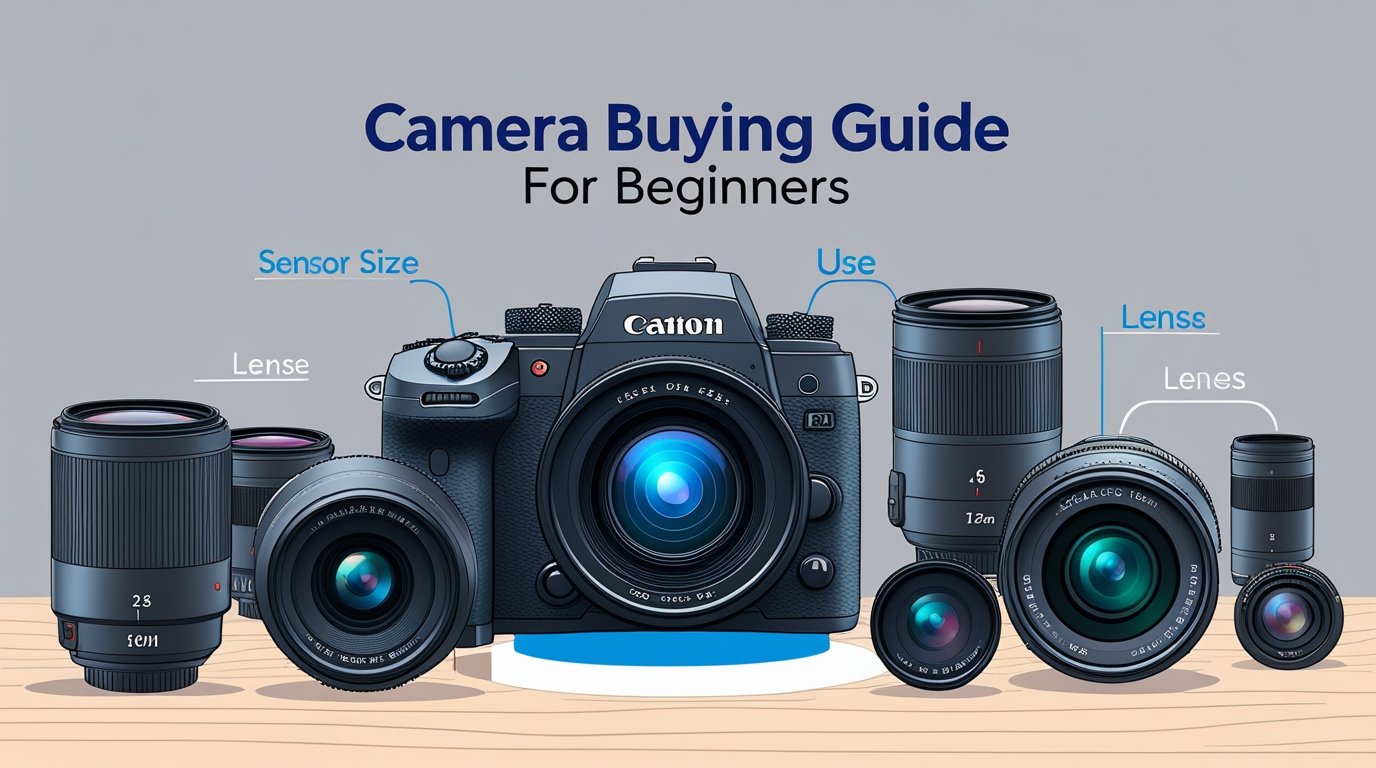
Choosing your first camera can feel overwhelming. With endless brands, sensor types, and lenses on the market, beginners often struggle to find the right fit. This guide simplifies the decision-making process, helping you understand the essential features that matter most—sensor size, lens options, and practical use cases. By the end, you’ll be confident picking a camera that matches your photography style and budget.
Understanding Camera Sensor Size
The sensor is the heart of any camera. It determines image quality, low-light performance, and depth of field.
Types of Camera Sensors
- Full-Frame Sensor:
Largest standard sensor, offering superior image quality, excellent low-light performance, and shallow depth of field. Ideal for professional photographers or serious hobbyists. - APS-C Sensor:
Slightly smaller than full-frame, APS-C sensors are common in mid-range DSLRs and mirrorless cameras. They balance affordability with high-quality results. - Micro Four Thirds:
Smaller sensor format used in many compact and mirrorless cameras. Offers portability but slightly reduced low-light performance. - Compact/1-Inch Sensors:
Found in point-and-shoot cameras and premium compact models. Suitable for casual photography or travel but limited in creative control.
Why Sensor Size Matters
- Image Quality: Larger sensors capture more light, producing sharper, detailed images.
- Depth of Field Control: Bigger sensors allow better background blur (bokeh) for portraits.
- Low-Light Performance: Larger sensors reduce noise in dim environments.
Example Use Case:
If you plan to shoot landscapes, a full-frame or APS-C sensor will give better dynamic range and detail. For travel photography, a compact camera with a smaller sensor may suffice for convenience.
Choosing the Right Lens
Lenses are just as important as the camera body. They define how you capture your subject.
Lens Types for Beginners
- Kit Lens (18–55mm):
A versatile, affordable option suitable for everyday photography. Great for portraits, landscapes, and casual use. - Prime Lens (Fixed Focal Length):
Offers sharp images and wide apertures. Popular choices include 35mm, 50mm, and 85mm lenses. Ideal for portraits and low-light conditions. - Telephoto Lens (70–300mm+):
Zoom in on distant subjects like wildlife or sports. Bulkier and pricier but essential for specific needs. - Wide-Angle Lens (10–24mm):
Perfect for architecture, landscapes, and interior shots. Offers expansive views but can distort edges if not careful.
Lens Mounts and Compatibility
Ensure your lens matches the camera’s mount. Each brand has unique mounts (Canon EF, Nikon F, Sony E), and some lenses require adapters for cross-brand use.
Lens Features to Consider
- Aperture: Wider apertures (f/1.4–f/2.8) allow more light, enhancing low-light photography and background blur.
- Stabilization: Reduces blur from hand shake, essential for telephoto lenses or low-light shooting.
- Autofocus Speed: Critical for action photography, such as sports or pets.
Camera Types and Their Use
Understanding camera types helps beginners focus on what suits their lifestyle.
DSLR Cameras
- Pros: Excellent image quality, long battery life, wide lens selection.
- Cons: Bulkier, heavier, steeper learning curve.
- Best For: Enthusiasts, travel, portraits, landscapes.
Mirrorless Cameras
- Pros: Compact, fast autofocus, electronic viewfinder options.
- Cons: Slightly shorter battery life, lens options sometimes limited.
- Best For: Beginners who want portability without sacrificing quality.
Compact Cameras
- Pros: Lightweight, simple to use, pocket-friendly.
- Cons: Smaller sensors, less manual control.
- Best For: Casual photographers, travel, vloggers.
Action and Specialized Cameras
- Pros: Rugged, waterproof, ideal for sports and adventure photography.
- Cons: Limited creative flexibility.
- Best For: Outdoor enthusiasts, vloggers, extreme sports.
Key Features to Look For
- Megapixels: 12–24MP is sufficient for most users; more is not always better.
- ISO Range: Determines camera sensitivity to light; higher ISO helps low-light shooting.
- Autofocus Points: More points increase tracking accuracy for moving subjects.
- Connectivity: Wi-Fi/Bluetooth allows easy sharing and remote control.
- Video Capabilities: Consider 4K or higher if videography is a priority.
Pros and Cons Overview
| Camera Type | Pros | Cons |
|---|---|---|
| DSLR | High image quality, lens variety | Heavy, less portable |
| Mirrorless | Compact, fast autofocus | Shorter battery, lens cost |
| Compact | Lightweight, simple | Limited creative control |
| Action | Rugged, waterproof | Fixed lens, limited options |
Read more: How to Choose the Right Laptop for Video Editing on a Budget
Frequently Asked Questions(FAQs)
Q: Do I need a full-frame camera as a beginner?
A: Not necessarily. APS-C or Micro Four Thirds cameras provide excellent quality at a lower cost and are easier to carry.
Q: Can I use a smartphone instead of a camera?
A: Smartphones are convenient for casual use but lack the versatility, image quality, and creative control of dedicated cameras.
Q: What is better: DSLR or mirrorless for beginners?
A: Mirrorless cameras offer portability and advanced features, making them beginner-friendly, while DSLRs provide durability and extensive lens options.
Q: How important is lens selection for beginners?
A: Extremely. The lens often impacts image quality more than the camera body. Starting with a versatile kit lens is recommended.
Conclusion
Buying your first camera doesn’t need to be confusing. Focus on sensor size, lens compatibility, and intended use. Start with a beginner-friendly DSLR or mirrorless camera with a versatile lens, and gradually expand your gear as your skills grow. Investing time in understanding these fundamentals ensures you capture high-quality images and enjoy photography to the fullest.
